
Feeding Young Athletes | Mastering the Basics for Growth, Energy and Performance
When children start to train and compete in sport, nutrition becomes much more than just “eating well”. Their bodies are growing, developing and adapting to training all at the same time.
For parents, this can feel confusing and often overwhelming:
· How much should they eat?
· Are they eating enough to support training?
· Which meals actually help performance and recovery?
The good news is that you don’t need complicated diets. The key is understanding a few important principles of growth and energy.
Why Nutrition Matters More During Adolescence
Adolescence represents one of the most demanding phases of physical development. During this period, the body is undergoing rapid and complex changes that require a consistent supply of energy and nutrients. Growth accelerates, hormones shift significantly, and both muscle and bone development become more pronounced.
At the same time, young athletes are increasing their physical activity through training and competition. This creates a unique situation where the body must support both development and performance simultaneously. If either of these demands is not adequately met, it can have a noticeable impact on recovery, progress and overall wellbeing.
In simple terms, young athletes are not just fuelling sport, they are fuelling growth as well. Recognising this dual demand is essential for making sensible nutrition choices. A recent review published in Nutrients highlights that insufficient energy intake can negatively affect recovery, development and long-term health outcomes.
Understanding Resting Metabolic Rate (RMR)
A key concept in understanding energy needs is Resting Metabolic Rate. This refers to the amount of energy the body requires to maintain basic functions while at rest. Even without movement or exercise, the body is constantly working to sustain vital processes such as breathing, circulation, temperature regulation and tissue repair.
In young people, this baseline energy requirement is typically higher than in adults. The reason is straightforward: growth itself requires energy. This means that before any training is considered, a young athlete is already using a substantial amount of energy each day.
For parents, this highlights an important point. If a child appears to be eating frequently, it is often a reflection of genuine physiological need rather than poor habits.
The Growth Spurt: Peak Height Velocity (PHV)
During adolescence, children go through a period of particularly rapid growth known as Peak Height Velocity. This is the stage where height increases at the fastest rate and is often accompanied by noticeable physical changes.
For girls, this phase typically occurs around the ages of 11 to 12, while for boys it tends to occur slightly later, around 13 to 14. During this time, bones lengthen quickly, muscle mass begins to increase, and coordination may temporarily fluctuate as the body adapts.
Because these changes happen over a relatively short period, energy requirements rise sharply. If nutrition does not keep pace, it can affect not only performance but also long term development. Ensuring consistent and adequate intake during this stage is therefore particularly important.
Energy Balance: The Key Concept
At the centre of sports nutrition lies a simple but powerful idea: energy balance. This refers to the relationship between the energy consumed through food and the energy expended through daily life and physical activity.
For young athletes, energy is required for three main purposes. First, there is the baseline requirement needed to keep the body functioning at rest. Second, energy is needed to support growth and development. Third, additional energy is required for training, matches and general movement through the day.
When energy intake falls short of these combined demands, the body is forced to prioritise. Over time, this can lead to reduced recovery, slower development, increased injury risk and persistent fatigue. Maintaining a consistent and adequate intake of food is therefore one of the most important factors in supporting both health and performance.
How Much Should Young Athletes Eat?
There is no universal quantity that defines how much a young athlete should eat. Requirements vary widely depending on age, stage of development, type of sport, training load and individual metabolism.
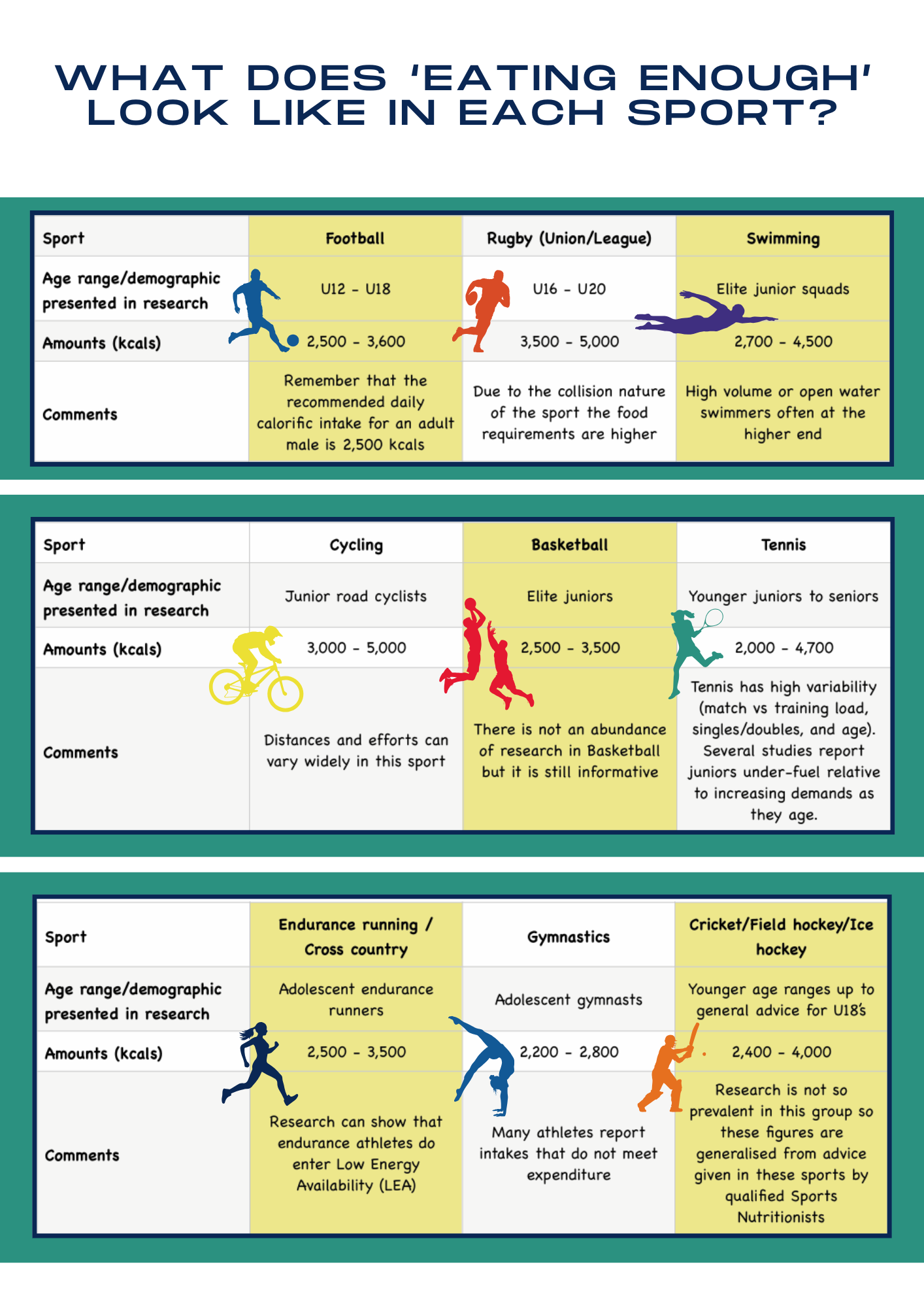
A table showing the approximate energy requirements (calories required) for youth athletes across different sports.
The above can be used as a guide, however at Future Athletes, rather than focusing on exact calorie targets, we advise a more practical approach to establish regular eating habits and ensure meals are balanced. This helps provide a steady supply of energy throughout the day without the need for complicated tracking.
Building a Consistent Daily Eating Pattern
A structured approach to eating can make a significant difference. Most young athletes benefit from three main meals supported by two to three good quality snacks across the day. This pattern helps maintain energy levels, supports concentration and ensures that the body has the fuel it needs for both activity and recovery.
Breakfast plays a key role in setting up the day, particularly when it includes a combination of carbohydrates and protein. Lunch and dinner should aim to provide a balance of macronutrients, while snacks can be used strategically to bridge gaps between meals and support training demands.
Pre-training carbohydrate based snacks are especially useful for providing readily available energy, while post training meals should focus on recovery by including both carbohydrates and protein.
A Practical Approach to Meal Balance
Instead of weighing or measuring food, a simple visual approach can be very effective. A typical main meal can include:
· A portion of carbohydrates such as rice, pasta or potatoes
· A source of protein such as chicken, fish or beans, and a serving of vegetables or fruit
· A small amount of healthy fats, such as olive oil, nuts or avocado
This method keeps meals balanced and flexible, allowing families to adapt based on preferences and availability without overcomplicating the process.



Recognising When Intake May Be Too Low
It is important to be aware of signs that a young athlete may not be eating enough. These signs can sometimes be subtle at first but tend to become more noticeable over time, such as:
· Persistent fatigue
· Difficulty recovering between sessions
· Frequent illness
· Reduced concentration
· Changes in mood, such as increased irritability
· Repeated injuries
· Stalled progress in training
If these signs are present, it is worth reviewing both nutrition and overall recovery habits to ensure the athlete is properly supported.
In their review article for Strength & Conditioning Journal, Marcus P. Hannon MSc, Graeme L. Close PhD, and James P. Morton PhD from the Research Institute for Sport and Exercise Sciences at Liverpool John Moores University, explain some of the longer term health issues that can be associated with insufficient energy intake in youth athletes:
“Chronic low EA (Energy Availability) may result in impaired growth and maturation of tissues and organs, reduced skeletal bone mineral accrual, increased risk of stress fractures, increased risk of osteoporosis later in life, delayed sexual maturation, disruption or cessation of menstruation, and a suppression of the immune system. Not only is this likely to have a negative effect on young athletes’ performance but also their long-term physical and psychological health.”
Supporting Long Term Development and Performance
Nutrition for young athletes does not need to be restrictive or overly complicated. The priority should always be to support healthy development while providing enough energy for sport.
By focusing on regular meals, balanced food choices and adequate overall intake, parents can create an environment where young athletes are able to develop physically, perform consistently and enjoy their sport.
Feeding young athletes effectively comes down to understanding that their bodies are managing both growth and training at the same time. This creates higher energy demands than many parents expect. Rather than focusing on strict rules or precise measurements, the most effective approach is to prioritise consistency, balance and sufficient overall intake. When these fundamentals are in place, young athletes are far more likely to recover well, develop properly and perform at their best.
FREQUENTLY ASKED QUESTIONS
1. Should young athletes follow a specific diet plan?
In most cases, a strict diet plan is not necessary. A balanced approach that includes regular meals and a variety of foods is usually more effective and sustainable.
2. Is snacking important for young athletes?
Yes, snacks play an important role in maintaining energy levels throughout the day, especially around training sessions. They help prevent large gaps between meals and support consistent fuelling. Opt for snacks that provide some nutrient value and will keep them fuller for longer, rather than ‘empty calories’ such as crisps or chocolate bars.
3. What is the biggest mistake parents make with sports nutrition?
At Future Athletes, the most common misconception by parents is underestimating how much energy young athletes actually need. The ‘Are you Eating Enough’ module in our Talented Athlete Nutrition Programme has proven to be the most eye-opening for parents and is without doubt the fundamental starting point to ensure the young athlete’s energy availability is optimised for growth, performance and recovery.
4. Is it bad for a young athlete to snack late at night?
No, in fact the opposite is true, however the quality of snack is important. A bowl of cereal with milk, or a banana and glass of milk is an ideal evening snack, particularly if dinner has been consumed a few hours before bedtime. Eating kiwi fruit at nighttime has also been evidenced to support sleep quality. Sleep is the optimal growth time, therefore topping up energy stores during this vital time of day is recommended for active youths.